Remember when entertainment content ruled the internet? Those days are fading fast. In 2026, educational content creators are pulling in 3x more engagement than entertainment channels, and brands are paying premium rates for knowledge-based partnerships. If you're still chasing viral dances while educators are building empires, you're missing the biggest shift in digital content since YouTube launched.
The numbers don't lie: Educational YouTube channels grew 156% in 2025, while entertainment channels saw just 12% growth. LinkedIn reports that posts with educational value receive 8x more shares than promotional content. Even TikTok—yes, TikTok—shows that #LearnOnTikTok videos have 2.4 billion more views than dance challenges in the first quarter of 2026.
🎓 This isn't just a trend—it's a fundamental change in how audiences consume content. People aren't just scrolling for distraction anymore; they're investing their time in learning. And if you can teach what you know, you can build a sustainable creator career that actually makes a difference.
In this guide, you'll discover why educational content is dominating 2026, how to position yourself as a knowledge creator, and the exact strategies successful educational creators use to build engaged audiences and monetize their expertise.

📊 The Data Behind the Educational Content Boom
The shift toward educational content isn't speculation—it's backed by hard data across every major platform. YouTube's 2026 Creator Report shows that "how-to" and educational videos have the highest completion rates at 68%, compared to 41% for entertainment content. This means viewers are not only clicking, but actually staying to learn.
Podcast statistics tell a similar story. Educational podcasts saw a 203% increase in listener hours in 2025, with the average listener spending 7.2 hours per week on knowledge-based shows. Meanwhile, true crime and comedy podcasts—former category leaders—grew only 18% during the same period.
- Platform Priority Shifts: Instagram and TikTok algorithms now favor educational content in 2026, with Meta confirming that "valuable content" receives 3x distribution boost
- Audience Demographics: Gen Z (18-24) now spends 4.3 hours weekly consuming educational content, up from 1.8 hours in 2023
- Monetization Advantage: Educational creators command CPMs 2-4x higher than entertainment creators due to engaged, high-intent audiences
- Brand Partnerships: 73% of brands prefer partnering with educational creators for authentic audience alignment
- Retention Rates: Knowledge-based channels see 40% higher subscriber retention than entertainment channels

🧠 Why Audiences Crave Knowledge Over Entertainment
The psychology behind this shift is fascinating. After years of doomscrolling and mindless consumption, audiences are experiencing "content guilt"—the feeling that they've wasted time after a scrolling session. Educational content solves this by providing entertainment and value, eliminating the guilt factor entirely.
Dr. Sarah Chen, a digital behavior researcher at Stanford, explains: "We're seeing a maturation of digital audiences. The dopamine hit from entertainment content is short-lived, but learning something new provides sustained satisfaction and a sense of personal growth. This creates a positive feedback loop that keeps audiences coming back."
💡 Creator Insight: Educational content isn't boring—it's entertainment with purpose. The most successful knowledge creators in 2026 understand that teaching and engaging aren't opposites; they're complementary skills that, when combined, create unstoppable content.
There's also an economic factor. In an uncertain job market, people are investing in skills development. They're using social media as a free university, learning everything from coding to personal finance to communication skills. This "productive scrolling" trend has fundamentally changed what audiences expect from creators.
🎯 Finding Your Knowledge Niche in 2026
The biggest mistake aspiring educational creators make is thinking they need a PhD to teach. Wrong. You don't need to be the world's leading expert—you just need to know more than your audience and explain it clearly. The "learn in public" philosophy has proven that teaching what you're learning is just as valuable as teaching what you've mastered.
Start by auditing your skills and knowledge:
- Professional expertise: What do you do for work? There are thousands of people who want to learn those skills
- Hobbies and passions: Your weekend activities could be someone else's dream skill to learn
- Life experiences: Unique challenges you've overcome (parenting, health, finance) are incredibly valuable
- Current learning: Document your learning journey in real-time—it's relatable and authentic
The sweet spot is where your knowledge, your passion, and audience demand intersect. Use tools like Google Trends, AnswerThePublic, and platform search functions to validate that people are actively seeking information in your area. In 2026, micro-niches perform better than broad topics because algorithms favor specificity.
🎬 Content Formats That Work for Educational Creators
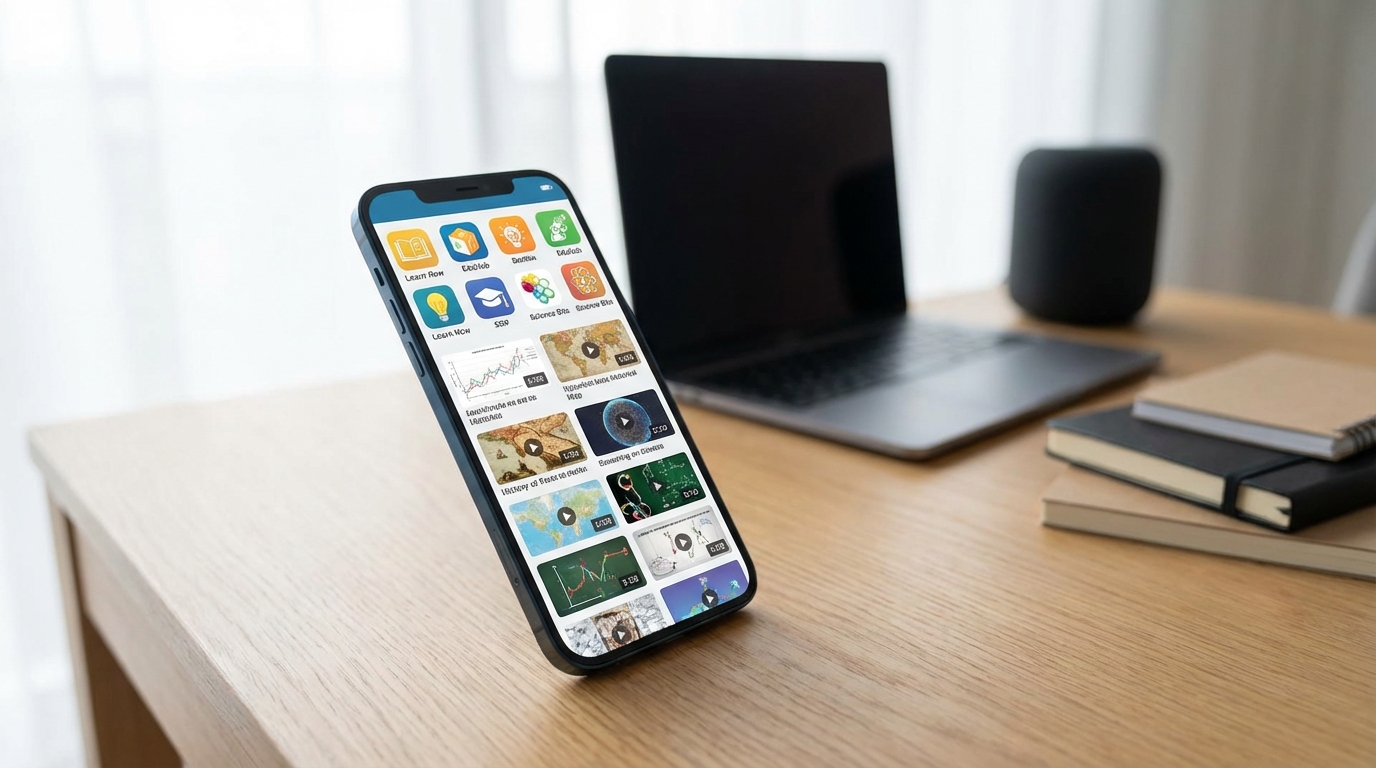
Educational content has evolved far beyond talking-head lectures. The most successful knowledge creators in 2026 use varied formats to keep audiences engaged while delivering real value.
Short-Form Educational Content (30-90 seconds): Perfect for TikTok, Instagram Reels, and YouTube Shorts. These work best for quick tips, myth-busting, or introducing concepts. The key is one clear takeaway per video. Creator @FinanceFemme grew to 2.3M followers in 2025 using 60-second personal finance tips.
Deep-Dive Long-Form (15-45 minutes): YouTube and podcast territory. These allow for comprehensive teaching, step-by-step tutorials, and nuanced explanations. Long-form performs better than ever in 2026 because audiences specifically seek this content when ready to learn seriously.
Interactive Educational Content: Live streams, Q&A sessions, and community posts create two-way learning experiences. The engagement metrics on interactive content are 5x higher than passive content, and platforms reward this with better distribution.
💡 Pro Tip: The most effective strategy in 2026 is the "pyramid approach"—create one comprehensive long-form piece, then break it into 10-15 short-form clips for other platforms. This maximizes your content's reach and creates multiple entry points for new audiences.
📱 Platform Strategy for Knowledge Creators
Not all platforms are equal for educational content, and in 2026, you need to be strategic about where you invest your time. Here's the current landscape:
YouTube: Still the king for educational content. The search functionality, long-form capability, and monetization options make it essential. Educational creators see 40% higher AdSense revenue per 1,000 views compared to entertainment. Start here if you're creating tutorials, courses, or in-depth explanations.
LinkedIn: Underestimated goldmine for knowledge creators. Business and professional development content performs exceptionally well, with some educational posts reaching millions organically. LinkedIn's algorithm in 2026 heavily favors original educational content over external links.
- TikTok & Instagram Reels: Awareness and top-of-funnel content—quick tips that showcase your expertise and drive followers to deeper content
- Twitter/X: Real-time insights, thread-style teaching, and building authority in your niche through consistent valuable posts
- Substack/Newsletter: Direct audience relationship and monetization—educational creators have 3x higher paid subscription conversion rates
The multi-platform approach isn't about being everywhere—it's about creating a content ecosystem where each platform serves a specific purpose in your audience's learning journey.
💰 Monetization Strategies for Educational Creators
Here's where educational content really shines: monetization potential far exceeds entertainment content. Because you're providing genuine value and building trust, audiences are willing to pay for deeper access to your knowledge.
Ad Revenue: Educational content commands higher CPMs ($8-25 compared to $2-8 for entertainment) because advertisers value engaged, educated audiences. YouTube creators in the education category report 2-3x higher earnings per view.
Digital Products: This is where knowledge creators truly excel. Courses, ebooks, templates, and tools convert at 2-5% compared to 0.5-1% for entertainment creators. Why? Because your audience is already in learning mode. Creator @CodeWithAlia made $180,000 in 2025 from a $49 coding course with just 85,000 followers.
Coaching and Consulting: Once you establish expertise, one-on-one or group coaching becomes viable. Educational creators charge $200-500/hour for coaching, with top creators commanding $1,000+/hour.
💡 Money Tip: The most profitable model in 2026 is the "value ladder"—free content builds audience, mid-tier digital products ($30-200) serve serious learners, and high-ticket coaching/consulting ($500-5,000) serves those who want personalized help. This creates multiple revenue streams from the same audience.
🛠️ Essential Tools and Tech Stack
You don't need expensive equipment to start, but the right tools make a significant difference in content quality and production efficiency. Here's what successful educational creators use in 2026:
- Recording: iPhone/Android with good lighting (softbox lights, $40) produce professional results—no need for $2,000 cameras initially
- Audio: The #1 quality factor. A $100 USB microphone (Blue Yeti, Samson Q2U) makes you sound professional instantly
- Editing: DaVinci Resolve (free) for video, Descript for podcast editing (transcription-based editing is a game-changer)
- Graphics: Canva Pro ($12.99/month) for thumbnails, social graphics, and presentation slides
- Screen Recording: OBS Studio (free) or Loom for tutorials and demonstrations
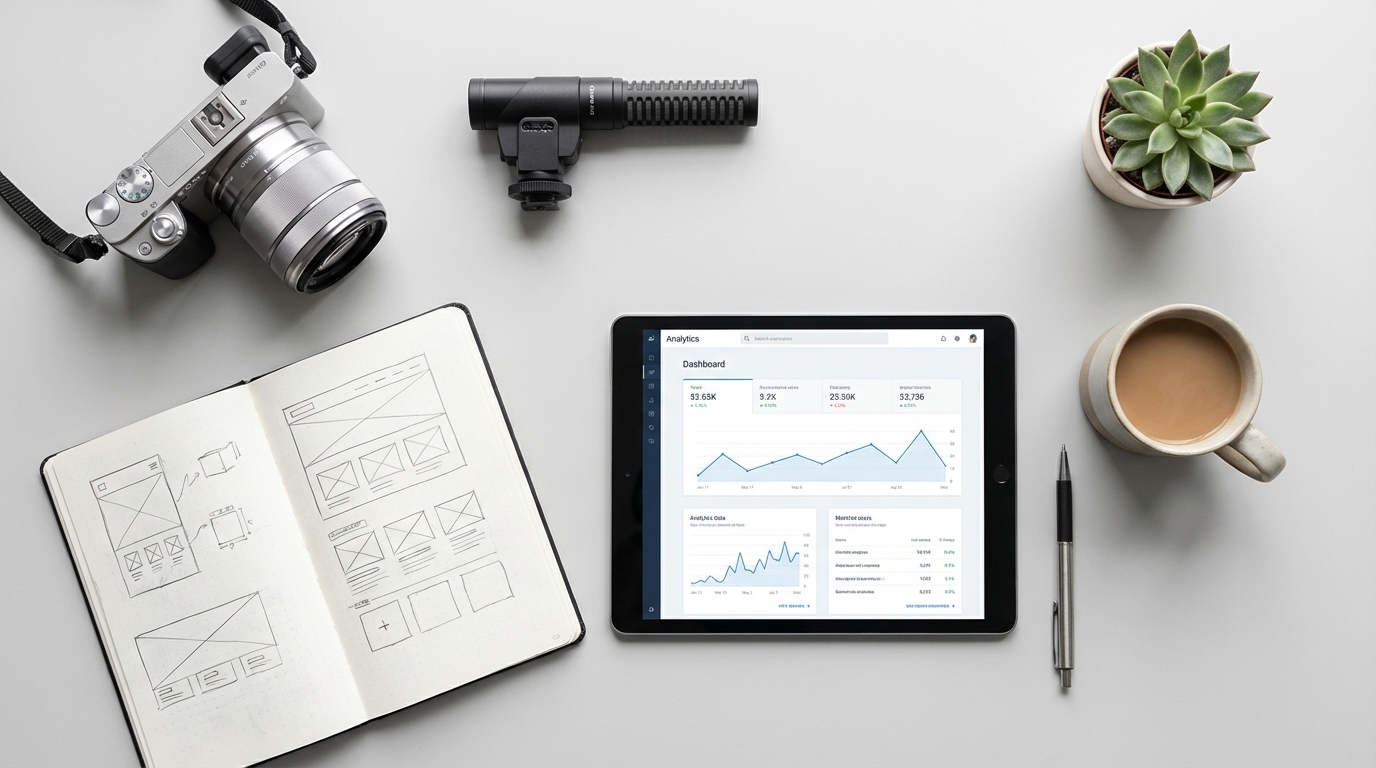
For content management and distribution, tools like Buffer or Later help schedule posts, while analytics platforms like TubeBuddy or VidIQ provide insights on what's working. The key is starting simple and upgrading as you grow—don't let equipment be an excuse to delay starting.

🚀 Growing Your Educational Content Audience
Growth strategies for educational content differ significantly from entertainment content. You're not chasing virality; you're building a loyal audience that trusts your expertise. This requires consistency, value, and strategic optimization.
SEO and Discoverability: Educational content has massive SEO advantages. People search for learning content—"how to start a podcast," "Excel formulas explained," "investing for beginners." Optimize titles, descriptions, and content for these search terms. YouTube and Google treat educational content favorably in rankings.
The First 30 Videos Rule: Your first 30 pieces of content are your testing phase. Try different formats, topics within your niche, and styles. Analytics will show you what resonates. Most successful creators in 2026 say their content didn't "click" until videos 20-40, so persistence is crucial.
Community Building: Educational audiences are highly engaged. Respond to every comment initially, create community posts, ask questions, and make your audience feel heard. This builds loyalty that entertainment creators struggle to achieve. Creator @HistoryTea grew to 500K subscribers with 80% video completion rates by building a genuine learning community.
💡 Growth Hack: The "gateway content" strategy works exceptionally well for educational creators. Identify the 3-5 questions beginners in your niche always ask, then create the definitive answer to each. These become evergreen traffic magnets that continually attract new audiences.
⚡ Common Mistakes Educational Creators Make
Learning from others' mistakes saves months of frustration. These are the most common pitfalls that sink educational creator channels before they gain traction:
- Too Much Information: Overwhelming audiences with complexity kills engagement. One clear concept per video performs better than cramming everything you know into one piece
- No Personality: Educational doesn't mean boring. The most successful knowledge creators inject personality, humor, and storytelling into teaching
- Inconsistent Posting: Educational audiences expect reliability. Sporadic posting breaks the trust and learning routine you're building
- Ignoring Beginners: Advanced content has smaller audiences. Most demand is for beginner-to-intermediate level content—don't skip basics
- Poor Titles and Thumbnails: Even valuable content needs compelling packaging. Spend 20% of your time on titles/thumbnails
The biggest mistake? Waiting until you feel "expert enough." You don't need to know everything—you need to know more than your target audience and be willing to teach clearly. Start now, improve continuously.
🎓 The Future of Educational Content Creation
Looking beyond 2026, educational content is positioned to become the dominant form of creator economy content. AI will automate entertainment content production, but authentic teaching—especially with personality and storytelling—remains deeply human.
Emerging trends to watch: AI-assisted personalized learning paths, interactive educational content with real-time feedback, and hybrid creator-educator models where social media creators partner with traditional educational institutions. The lines between entertainment, education, and social media will continue blurring.
The opportunity is NOW. The barrier to entry is low, audience demand is high, and platforms are rewarding educational content more than ever. Whether you want to build a full-time creator business or establish authority in your field, educational content is the most sustainable path forward in 2026 and beyond.
What's your expertise? What could you teach? The world is waiting to learn from you. Don't let impostor syndrome or perfectionism delay your start. Create your first educational post this week—even if it's a simple tip or lesson learned. Your future audience is out there, searching for exactly what you know. 🚀